Aluminum for Exposed Patios
Aluminum holds its shape better in extreme heat and offers a rigid structure for windy conditions. It is generally the better fit when afternoon sun and long-term durability drive the decision.
Gilbert Shade Structures installs vinyl and aluminum patio covers across Gilbert, Chandler, and the East Valley, where desert heat makes material choice especially important. Aluminum generally offers better long-term durability, while vinyl suits a smaller upfront budget and a patio with less direct sun. Your roofline, sun exposure, and plans for the home determine which tradeoff fits.
Aluminum holds its shape better in extreme heat and offers a rigid structure for windy conditions. It is generally the better fit when afternoon sun and long-term durability drive the decision.
Vinyl offers a lower upfront price and color built into the material, so repainting is unnecessary. Partial shade or east-facing exposure makes it a more practical choice than a fully exposed west-facing patio.
A site evaluation should compare the roof attachment points, patio span, and sun exposure before selecting either material. Vinyl may need additional supports across wider openings.
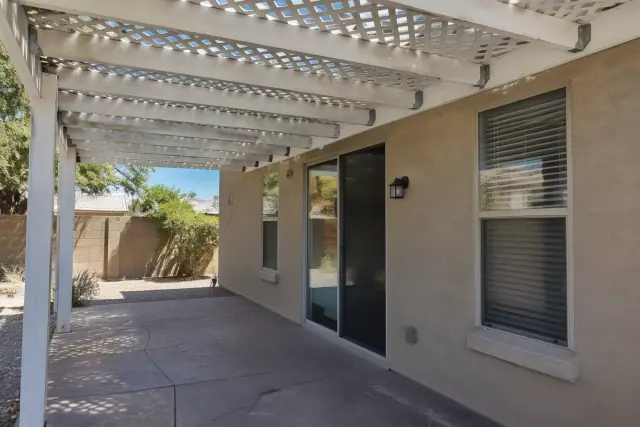
An open vinyl lattice roof allows airflow while giving the patio a clean, white finish. Partial shade reduces the direct afternoon exposure that can accelerate wear.
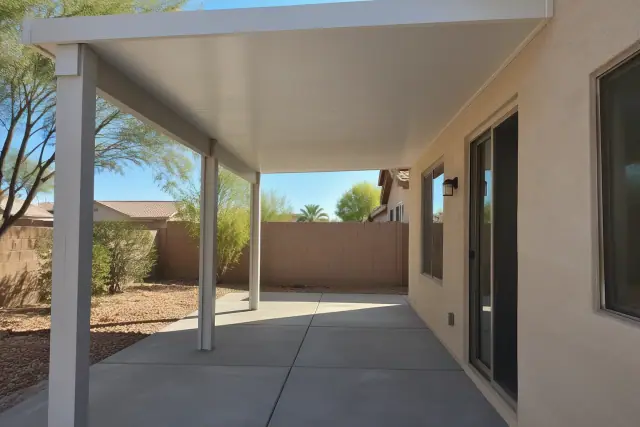
Solid insulated aluminum panels help limit heat transfer beside a wall that catches afternoon sun. Compare this coverage with open lattice when summer comfort is the priority.
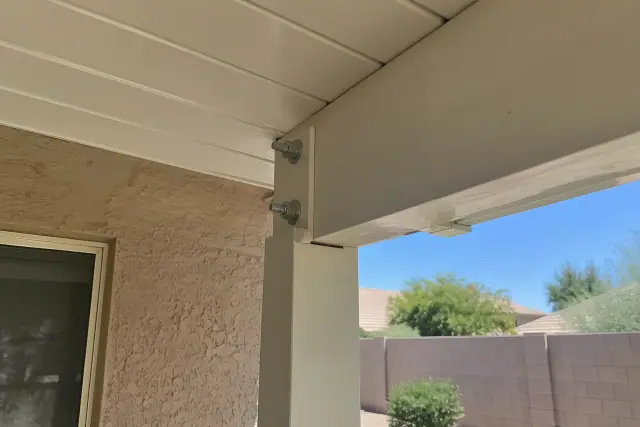
The fasteners and connection to the house matter when judging either cover's condition. Loose hardware or movement at the attachment calls for inspection before deciding on repairs.
Most residential vinyl lattice covers cost about $3,080-$6,300 total. Vinyl lattice and open-lattice aluminum designs are entry-level options generally under $6,500 installed for a standard residential patio, depending on scope.
Over a 20-year ownership period, aluminum's longer service life can offset its higher installation cost. Vinyl may need one full replacement within that window in harsh sun, narrowing the initial price gap.
Hose vinyl down with mild soap a couple times a year and check seams and end caps. Rinse aluminum, touch up scratches, and check for loose fasteners after major monsoon storms; neither material needs sealing or staining.
A cracked or yellowed vinyl panel usually needs replacement, while an aluminum scratch may only need matching touch-up paint. Aluminum dents from hail, ladders, or falling branches are harder to repair invisibly.
| Decision factor | Vinyl patio cover | Aluminum patio cover |
|---|---|---|
| Installed cost per square foot | About $15-$40; lower upfront investment. | Roughly $20-$60; higher upfront investment. |
| Typical service life | 15-25 years; some sources cite as little as 10-15 years in harsh, high-UV climates. | Typically 20-30 years; some powder-coated systems can reach 40-50 years. |
| Heat and sun exposure | Can soften, warp, or chalk under sustained heat, including surface temperatures above roughly 115°F on unshaded patios. | Generally holds its shape better in extreme heat; reflective finishes and insulated panels help manage heat transfer. |
| Wind and impact | Internal aluminum reinforcement helps; aging vinyl can crack under stress or impact. | A rigid, engineered structure handles monsoon wind well, but hail or debris can leave dents. |
| Moisture and finish | Resists moisture, rot, and corrosion; color is embedded in the material. | Does not rust like iron; a quality coating helps limit oxidation and pitting. |
| Best fit | A tighter installation budget, a smaller patio, or a partly shaded setting. | An exposed patio, longer ownership, or a design with insulated panels or adjustable louvers. |
Vinyl is a PVC-based extrusion, often reinforced with internal aluminum bracing. That reinforcement can improve performance compared with basic vinyl lattice, but aging vinyl still becomes more vulnerable to impact and offers fewer color and design choices. Aluminum provides a rigid, non-combustible metal structure with finishes that can resemble wood beams without the rot risk. A quality coating helps resist surface oxidation and pitting, although the metal can still dent. We have serviced aluminum ramadas and patio covers in older Gilbert neighborhoods that remained structurally sound after two decades with cosmetic wear.
Roof design changes comfort as much as the material: solid panels block direct sunlight, lattice allows more airflow, and adjustable louvers let you change shade coverage. Insulated aluminum panels and reflective finishes can help manage heat beside a west-facing wall, while existing shade trees can make vinyl more suitable. Older Val Vista Lakes homes and newer homes near San Tan Village can have different roof attachment points and shade needs. Before construction, confirm the permit process with the Town of Gilbert Building Safety Division and check HOA design requirements in communities such as Power Ranch or Val Vista Lakes. Site evaluation, engineered plans where required, permit filing, and final inspection should be part of the installation scope.
Can either cover support fans and lighting? Both can accommodate electrical runs, though aluminum generally offers more mounting flexibility and vinyl may need extra bracing. What changes the price beyond the material? Patio size, lattice versus solid insulated roofing, attachment method, engineering, and added fixtures all affect the total. When should you replace instead of repair? Localized damage may be repairable if the frame is sound, but widespread vinyl brittleness, yellowing, or sagging, or corrosion and flex in an aluminum frame, calls for an inspection of the full structure.
Share your patio's size, sun exposure, roofline, and preferred budget. We can evaluate the site, review HOA restrictions, and explain how vinyl and aluminum compare for your home before recommending a material.