Solid Roof: Covered Outdoor Living
A solid roof suits a patio used for meals, seating, or entertaining when rain protection matters. Include gutters and downspouts so monsoon runoff moves away from the structure and foundation.
This guide from Gilbert Shade Structures compares solid and slatted pergola roofs for Gilbert patios, backyards, and commercial spaces. Choose solid coverage when dependable overhead shade and rain protection matter most, or slats when filtered sunlight and an open-air feel suit how you use the space. Adjustable louvers offer another option when your needs change throughout the day.
A solid roof suits a patio used for meals, seating, or entertaining when rain protection matters. Include gutters and downspouts so monsoon runoff moves away from the structure and foundation.
Spaced cedar or aluminum boards keep the pergola visually open. Wider gaps admit more sunlight; tighter spacing increases shade but reduces airflow beneath the roof.
Rotating louvers let you change the balance of sun and shade instead of committing to fixed gaps. Closing the roof adds rain protection, while opening it restores the open-air feel.
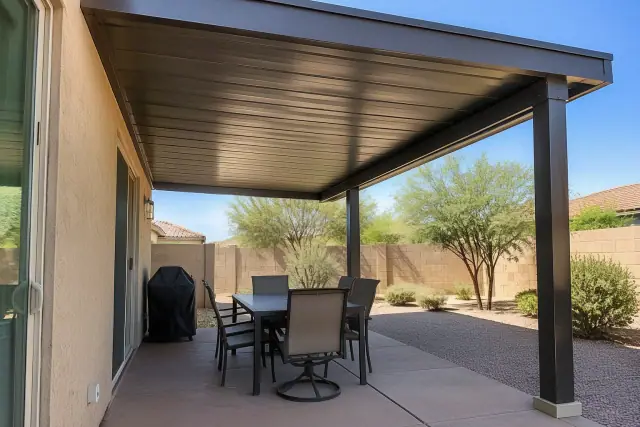
Continuous metal panels provide overhead shade for a dining table. Insulated or vented panels help reduce the heat buildup that uninsulated metal can trap.
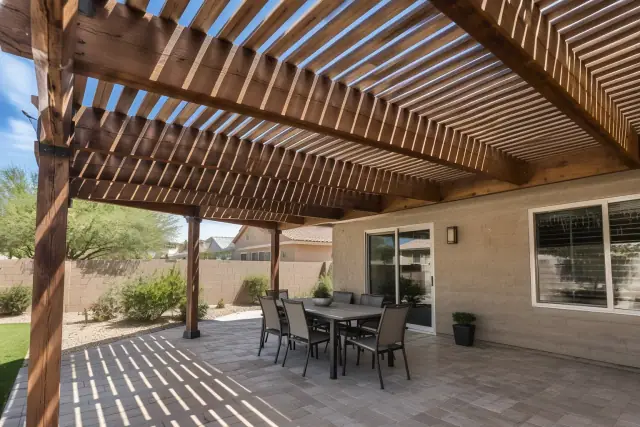
Stripes of sunlight reveal how board width and gaps affect patio shade. That pattern changes as the sun moves, so consider the hours you expect to sit outside.
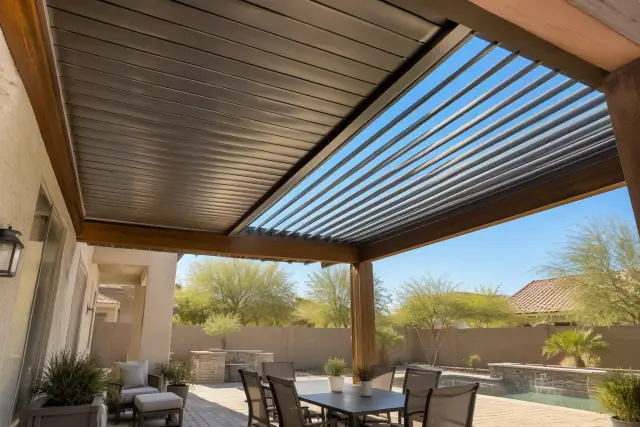
Open louvers admit light and air, while closed louvers provide overhead coverage. The contrast helps explain why adjustable roofs suit changing shade needs.
Solid roof pergolas typically cost $3,000-$12,000 installed; louvered systems run $8,000-$25,000. Size, materials, framing complexity, existing concrete, and new footing needs affect the total. Compare the included scope as well as the roof style.
Aluminum roof structures can last 25-50+ years, while untreated wood slats last 10-15 years in Arizona sun. Roof material and upkeep deserve attention alongside the initial installation cost.
Wood slats need resealing every 2-3 years in Arizona sun, plus cleanout of leaves, dust, and monsoon debris between boards. Aluminum and polycarbonate need occasional rinsing; louver channels also need cleaning to keep rotation smooth.
Before replacing slats with solid panels, have the existing footings, post spacing, and beam sizes checked for the added roof load. Reinforced posts or additional footings may be needed, so decide your intended roof type before the original build when possible.
| Decision factor | Solid roof | Slatted roof | Louvered roof |
|---|---|---|---|
| Shade level | 100% overhead shade with opaque panels; polycarbonate transmits light | Typically filters 40-70% of direct sunlight, depending on spacing | 0-100% adjustable shade as louvers open or close |
| Rain protection | Continuous overhead coverage with planned drainage | None to minimal through open gaps | Overhead rain protection when fully closed, with drainage |
| Common materials | Metal panels or polycarbonate | Cedar or aluminum boards | Aluminum louvers |
| Cost per square foot | Roughly $90-$125 | Roughly $37-$90 | Roughly $150-$300 |
| Best fit | A covered outdoor room with consistent overhead shelter | An airy patio where filtered light matters more than rain cover | A space needing both open-air use and closed coverage |
Solid coverage can use metal panels, polycarbonate, or shingled decking, but these materials do not all handle sunlight the same way. Standing-seam metal provides opaque coverage; multi-wall polycarbonate keeps rain out while transmitting light. Tinted or opal-finish polycarbonate is an alternative to clear panels, which can yellow or haze after prolonged UV exposure. Insulated or vented solid panels reduce heat buildup beneath the roof. Powder-coated aluminum offers a low-maintenance option, while cedar slats preserve the lighter appearance some Heritage District and Val Vista homeowners prefer.
Start with the hours you use the patio, its sun exposure, and whether you want to keep using it when rain arrives. Compare HOA rules, the proposed framing, and the drainage layout before settling on a style. Lattice-style slatted coverage runs about $90 per square foot installed, while fully covered solid roofing runs closer to $125 per square foot; material and scope still affect the final comparison. Ask how footing layout, post setting, framing, roof installation, and final inspection are included in the work. Confirm the structural and permit requirements for the specific project before installation.
Is a slatted roof worthwhile in Arizona heat? Yes, when partial shade and airflow are the goal, but it will not eliminate the afternoon heat load. How far can louvers move? Most systems we install rotate through 0-170 degrees, allowing shade adjustments through the day. How long do aluminum louvers last? Aluminum louvered and solid roof systems commonly last 25-50 years; motorized components have separate manufacturer service intervals to review. Which roof helps reduce heat reaching the house? Solid or closed-louver coverage over south- or west-facing walls can reduce direct sun exposure more effectively than open slats. Consider wall orientation and the attached living space as well as patio comfort.
Describe your patio, when you use it, and whether shade, rain protection, or an open-air feel matters most. A site review can compare exposure, existing supports, and roof options. Ask for an itemized estimate covering materials, structural engineering, and permit coordination before approving the installation.